If a dentist has told you that you don’t have enough jawbone for dental implants, it can feel like you’ve run out of options. A lot of patients hear this and assume implants are simply off the table. In many cases, though, that isn’t true anymore.
Dental implant treatment has changed quite a bit over the last decade. Techniques that weren’t widely used in the past are now routine in many practices. Because of that, people who once were told they weren’t candidates may still qualify.
Bone loss in the jaw is very common after a tooth is lost. When a tooth is present, chewing forces stimulate the surrounding bone and keep it strong. Once the tooth is gone, that stimulation disappears. Over time the body starts to break down and reabsorb the unused bone.
This process can happen slowly over several years. It’s one reason patients who have worn dentures for a long time, or who have had untreated gum disease, are often told that their bone levels are lower than expected.
That doesn’t necessarily mean implants aren’t possible.
Why Bone Matters for Implants
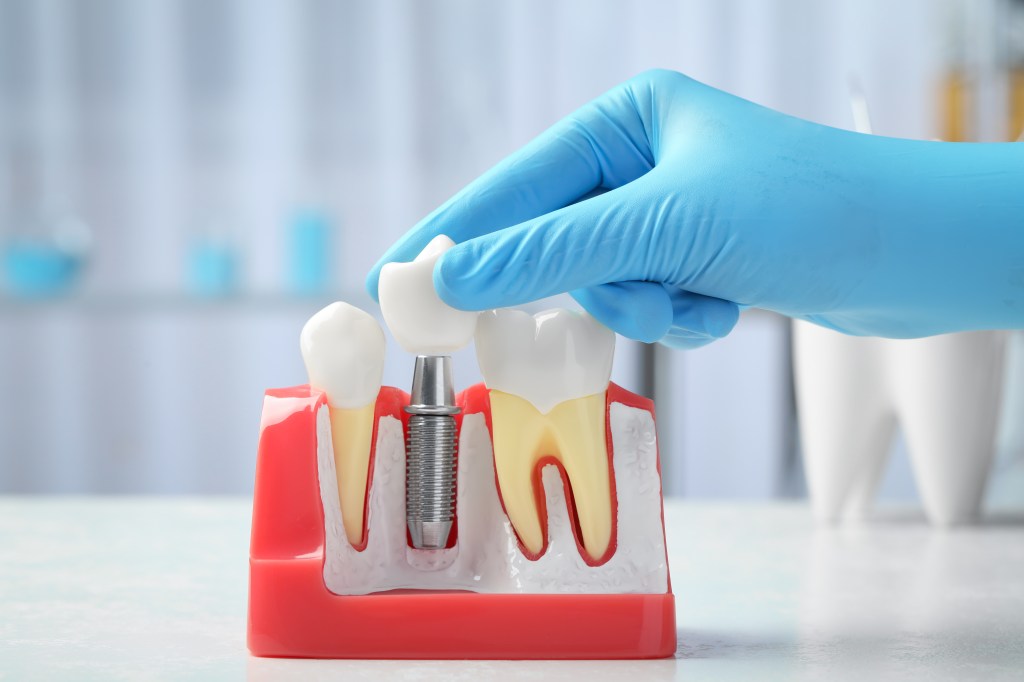
Dental implants work differently from traditional bridges or dentures. The implant itself acts like an artificial root and is placed directly into the jawbone. After placement, the surrounding bone gradually bonds with the implant in a process called osseointegration.
This bond is what gives implants their stability. Because of that, the dentist needs enough healthy bone to support the implant and allow it to fuse properly.
Years ago, limited bone often meant implants couldn’t be placed. Today there are several ways dentists can work around that problem.
Rebuilding Bone with Grafting
One of the most common solutions is bone grafting. During this procedure, graft material is placed in areas where the bone has weakened or shrunk. The body gradually incorporates the material and begins forming new bone in that location. Once the area heals, there may be enough bone to support an implant.
In the upper jaw, a dentist may also recommend something called a sinus lift. This procedure creates additional space for bone beneath the sinus cavity, which can make implant placement possible in areas that previously didn’t have enough support.
When Full Arch Implants Are an Option
For patients replacing many teeth, full arch implant systems can sometimes avoid the need for extensive grafting. These treatments place implants in the strongest parts of the jaw and may angle them slightly to improve stability.
Because of the way they distribute support, patients with moderate bone loss can often still receive a full set of fixed teeth without undergoing large reconstruction procedures.
Imaging Has Improved the Evaluation Process
Another reason more patients qualify for implants today is improved imaging. Cone beam CT scans allow dentists to see the jaw in detailed 3D. They can measure bone density, locate nerves, and plan implant placement with much more precision than with traditional X-rays.
Sometimes what appears to be insufficient bone on a regular X-ray turns out to be manageable once a CBCT scan is taken.
It May Be Worth Getting Another Opinion
If you were told years ago that implants weren’t possible because of bone loss, it may be worth having another consultation. Implant techniques and technology have advanced quickly, and many providers now offer treatments that weren’t common in the past.
Bone loss after tooth loss is very common. Fortunately, modern implant dentistry has developed a number of ways to work around it.
 healthysmileblog.com
Leave a comment